
Invoicing, stock, payroll and the books.
One system.
The most feature complete and commercially ready release of Core to date. Built in South Africa, for the way South African businesses actually trade.
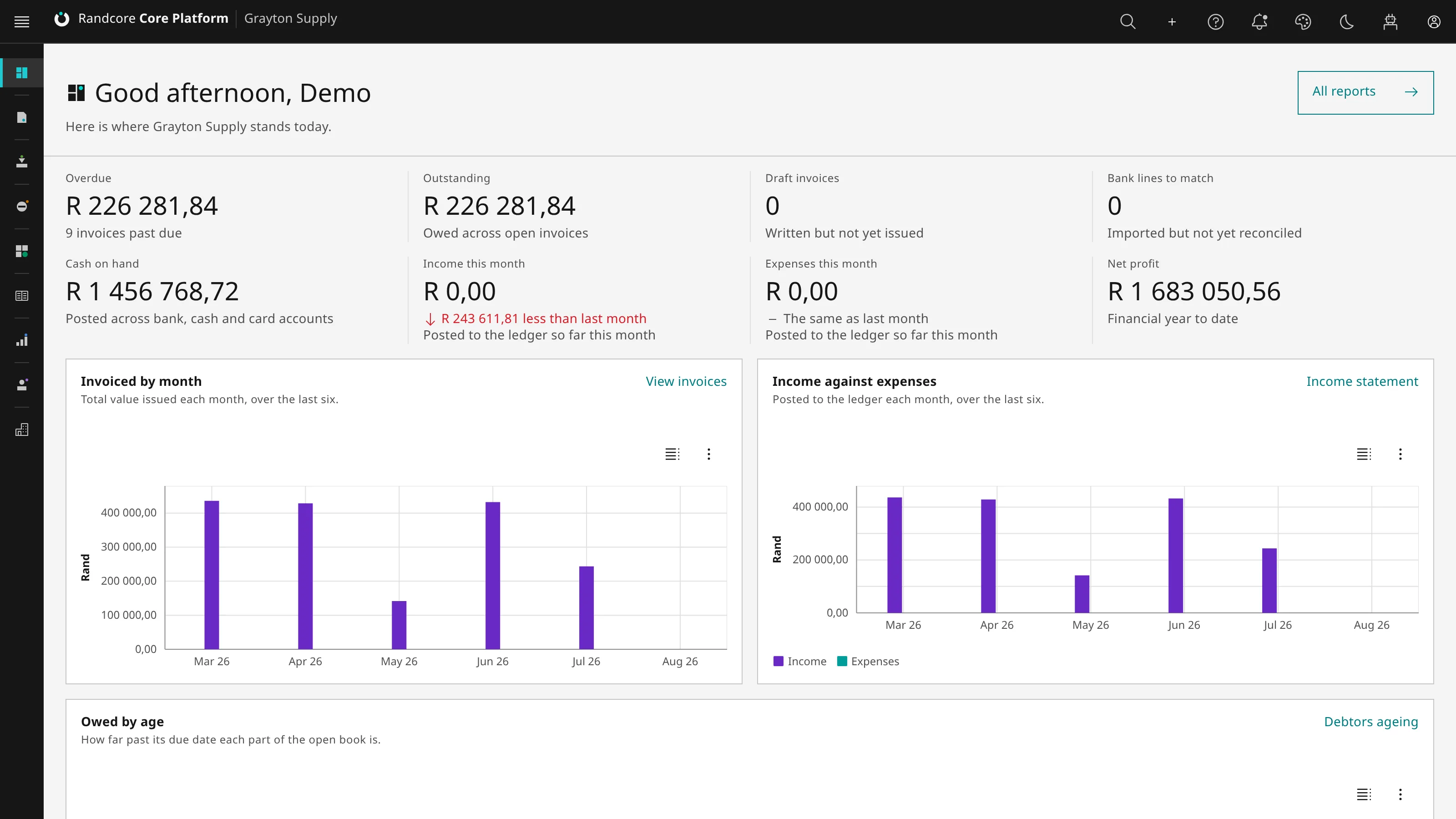
What changes when it is one system
A quote becomes an invoice, the invoice allocates stock, the payment closes the ledger entry. One record moving, not four systems being reconciled.
Every posting happens as the work happens, so month-end is a review rather than a rebuild. Your accountant reads the same numbers you do.
Overdue, cash on hand, stock available and payroll cost on a single screen, for the tenant you are standing in.
Ten modules on one spine
Not ten products bolted together. One ledger, one customer record, one stock figure, so an invoice raised in Sales moves the number in Reports without anyone re-typing it.
Core Invoice
Quotes, invoices, credit notes and customer statements, with recurring billing and payment reminders.
Core Accounting
A real double-entry ledger, bank statement import and reconciliation, trial balance and reports.
Core WMS
Stock that moves the books when it moves off the shelf. Products, movements and orders.
Core Purchases
Suppliers, bills and what you owe, tied back to the same ledger.
Core Payroll
SARS-aligned payroll. PAYE, UIF and SDL on a versioned tax year, payslips and leave.
Core Expenses
Staff claims that route for approval and post themselves once approved.
Core CRM
The pipeline before the invoice. Companies, contacts and deals on the same record.
Core Shipping
Book a courier and let the freight cost find its own account.
Core POSEarly
A till that draws down the same stock and posts the same sale.
Cora AIEarly
Ask a question and get an answer from your live figures, not a spreadsheet.
Compare Core with what you use now
Side by side with Xero, Zoho Books, QuickBooks and Sage, on the published entry tiers, caps and prices.
Early developmentCore Legal is on the way
Practice management for South African firms: matters, time and fees, trust accounting, built on the same platform.
One document, start to finish
Raise the quote, convert it, send it, match the payment against the statement line. Every step writes to the ledger as it happens.
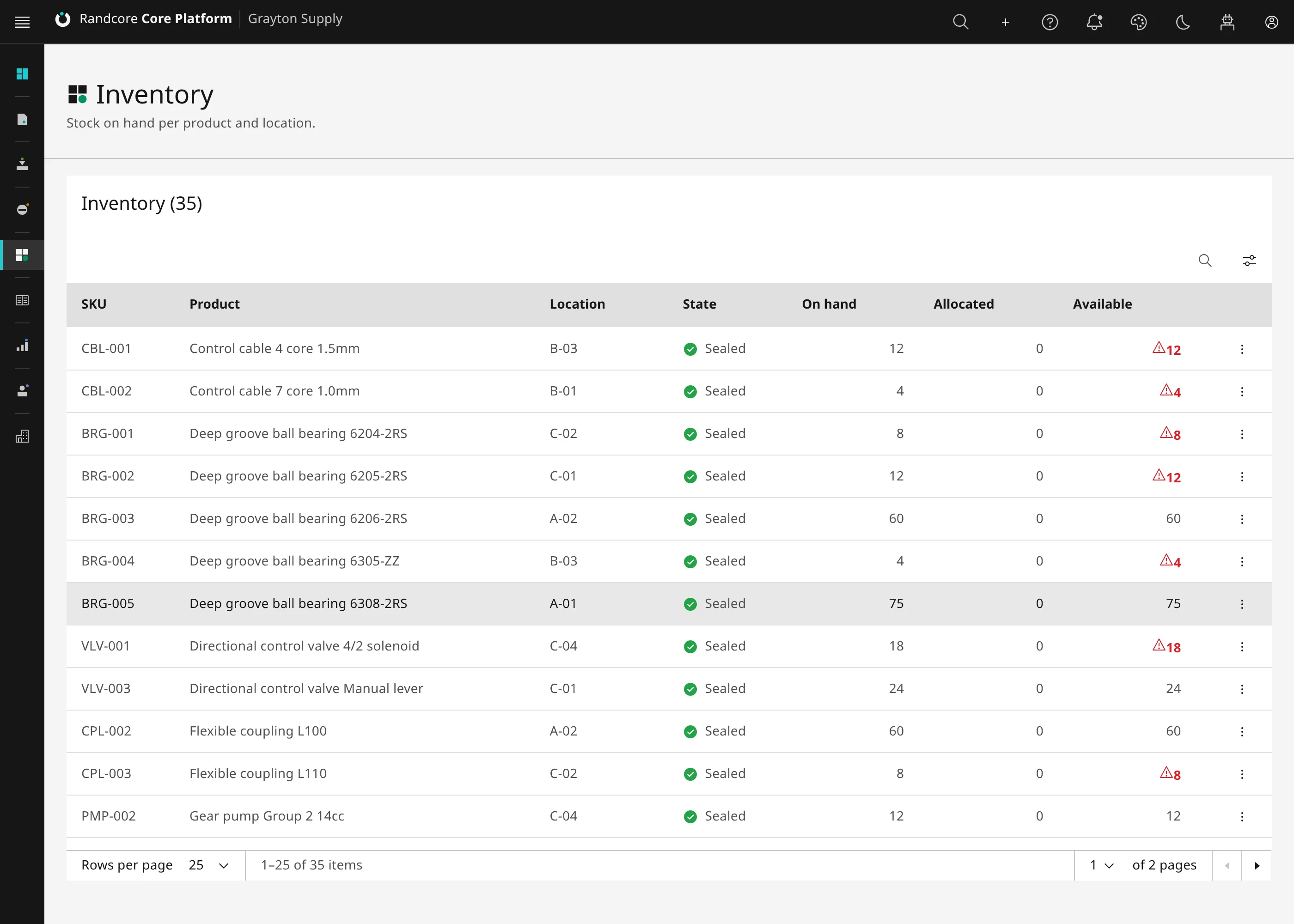
A real warehouse, not a stock field
Bins and locations, allocations against open orders, and an available figure that already accounts for what is promised. Pick, pack and dispatch from the same screen your invoices come off.
A warehouse system that would cost you R 25 000 a month on its own
Lots and serials, cycle counts, scanned pick lists, transfers, signed releases and returns. This is the specification tier-one warehouse vendors quote R25k a month for, standalone, before you have invoiced anybody. In Core it is part of the same system as your ledger.
And the ledger, payroll, invoicing and CRM are in the same R999. Not four contracts and an integration budget.
Lots and serials
Track a batch or an individual unit from receipt to the customer who has it.
Cycle counts
Count a bin without stopping the floor, with variances posted for approval.
Scanned pick lists
Pick against the order on a phone camera. No handheld hardware to buy.
Stock transfers
Move stock between locations with both sides of the movement recorded.
Signed releases
Stock released on a signature captured on the screen, kept with the record.
Returns, both ways
Customer returns and supplier returns, credited and put back correctly.
Packs and cases
Sell in units, cases or pallets off one stock figure that stays honest.
Labels and locations
Print bin and product labels; name your locations the way the floor does.
Ask about the business, see the working
Drop in a supplier invoice and the lines come back captured. Ask which customers are slipping and Cora shows you the invoices behind the answer, not a number you have to trust.
It is off in every instance by default and is set up by hand for the businesses that want to try it. Nothing in your data goes near Cora until you ask us to switch it on.
Priced for South African businesses
Send as many quotes and invoices as you like, and pay the same whether two people use it or twenty. Nothing is capped on purpose.
Everything you need to quote, invoice and get paid. Nothing capped.
- Unlimited invoices, quotes and credit notes
- Everyone in the team, at no extra cost
- Pay-by-link with Paystack, PayFast and NjiaPay
- Recurring invoices, statements and reminders
- Branded PDFs, signable on screen
- A portal where customers check and pay what they owe
Everything above, plus your books kept as you work.
- Everything in Core Invoice
- Books written as you invoice, not at month end
- Full chart of accounts and your own journals
- Import your bank statement and tick it off
- Income statement and balance sheet, always current
- VAT201-ready the day you register
The lot, for a business that wants to run on one system.
- Everything in Starter
- The full warehouse system, the R25k one, included
- Suppliers, purchase orders and bills
- Payroll with PAYE, UIF and SDL
- Staff expense claims and approvals
- CRM and your sales pipeline
14-day free trial, no card required to start. Run Core alongside your current tool for as long as you like. All prices are per month. Cancel any time.
Why not just use a free invoicer?
A free tool is fine until you need books, VAT and to be paid the South African way.
A free invoicer gives you a list of documents and nothing else, so your books are still somebody’s job at month end. Core writes them as you invoice.
Free tools do not put a South African VAT201 together for you. Core handles VAT correctly on every document and has the return ready when you register.
Tools built around Stripe and PayPal think in dollars. Core reads your South African statement, matches it to your invoices, and takes payment the way your customers actually pay.
Free plans are almost always a single seat. Core is one price no matter how many people use it, so the whole team works in the same place.
Your customers, suppliers and opening balances
Import from Zoho, Xero, QuickBooks or Sage, and run Core alongside what you have until you trust it.
Native apps, on every screen you work on
The warehouse runs off a phone, the office runs off a desktop. Native builds for both are in progress, Android and Windows first, iOS and macOS behind them.
Shipped, and what is next
R4 is out now. R5 is planned for Q1 2027 and brings live bank feed linking: statements arriving on their own, matched as they land.
Built here, for how we trade
VAT201 and EMP201
SARS periods, rounding and reference formats, out of the box.
Rand and cents
R 1 456 768,72, written the way it is here, everywhere in the product.
Statement imports
Import and match today; live feeds arrive with R5 in Q1 2027.
Support in your hours
A team on SAST, not a queue in another timezone.
Common questions
No. Run Core alongside Zoho and cut over when you’re ready. Import your history from Zoho Books, Xero, QuickBooks or Sage, and imported documents are flagged so they don’t double-count your books.
Documents are VAT-aware today. VAT201 preparation lives in Core Accounting and switches on when you register.
Invoices carry a pay-now link on three South African rails: Paystack, NjiaPay and PayFast. You reconcile against imported bank statements rather than a live feed in this release.
Every invoice, payment, credit note and stock movement writes to a single double-entry ledger. Capture a sale once and it moves the stock, updates the books and appears in a report, with no second entry anywhere.
Release 4 is the most complete Core to date, running the live books of Randcore and of Omnitronix. You start on a free trial, and some parts of some modules are still being finished in the open. We would rather tell you that than pretend otherwise.